We use research-based innovative learning & teaching methods and strategies that will effectively transfer knowledge and skills into the student’s brain.
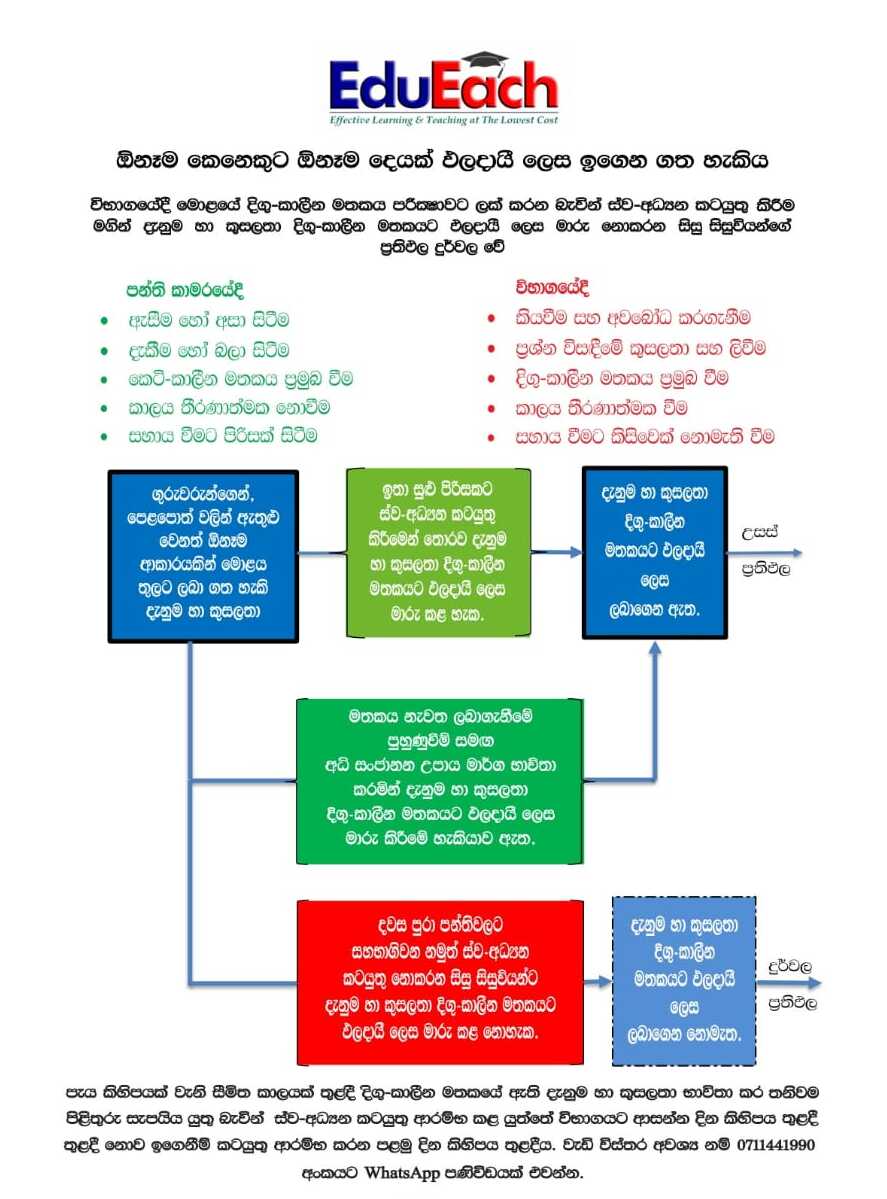
Most of the students do not learn effectively because they do not know the importance of self-study and do not have necessary support. In order to keep students engaged in the effective learning process and to keep them motivated, solutions must be provided to the problems that cannot be solved on their own. Problems that arise daily should be able to be noted down or referenced at any time before they are forgotten. Students, who have low scores on monthly or term tests and have difficulty understanding theories or have difficulty writing answers to past exam questions on their own, receive poor results such as F or S.
The learning process of each student, including weak students who are ignored by many teachers as they cannot be marketed like the district's first, must be personally monitored. Because learning is a dynamic process that occurs throughout the life span, it is a complex process governed by many factors such as physiological, psychological and sociocultural. The practice of learning process monitoring is an essential component of quality education because it is a strong predictor of student achievement. Various types of collected and analyzed data can be used to identify the current level of knowledge, understanding and problem-solving skills of each student. Interventions such as teaching and learning strategy adjustments should be made based on current performance level and uniqueness of each student.
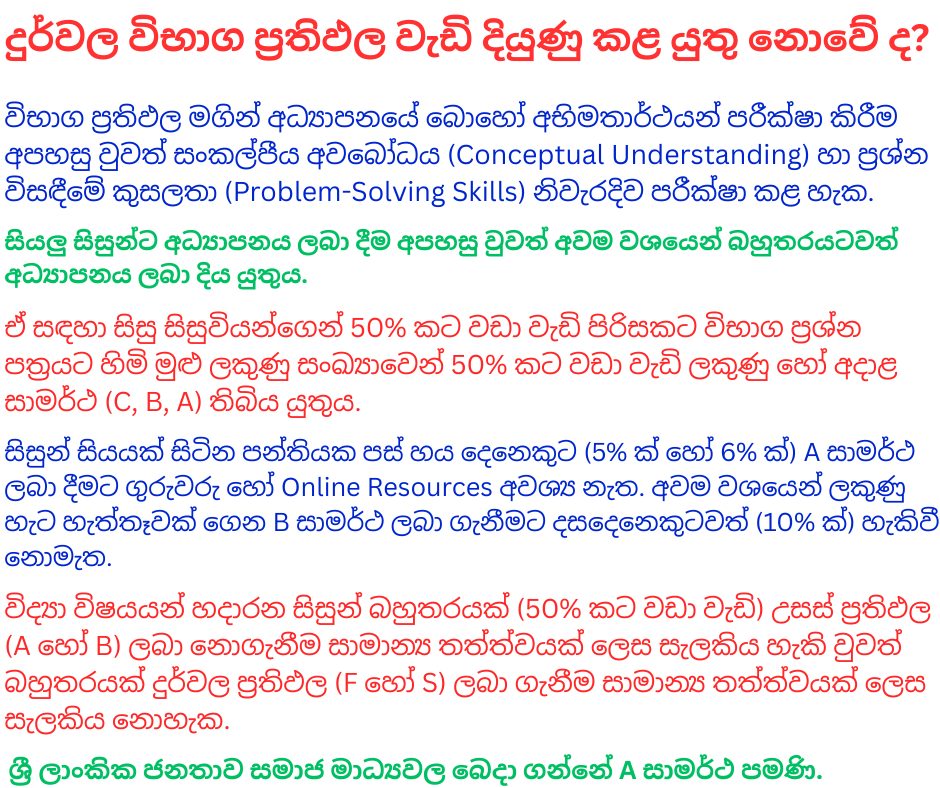
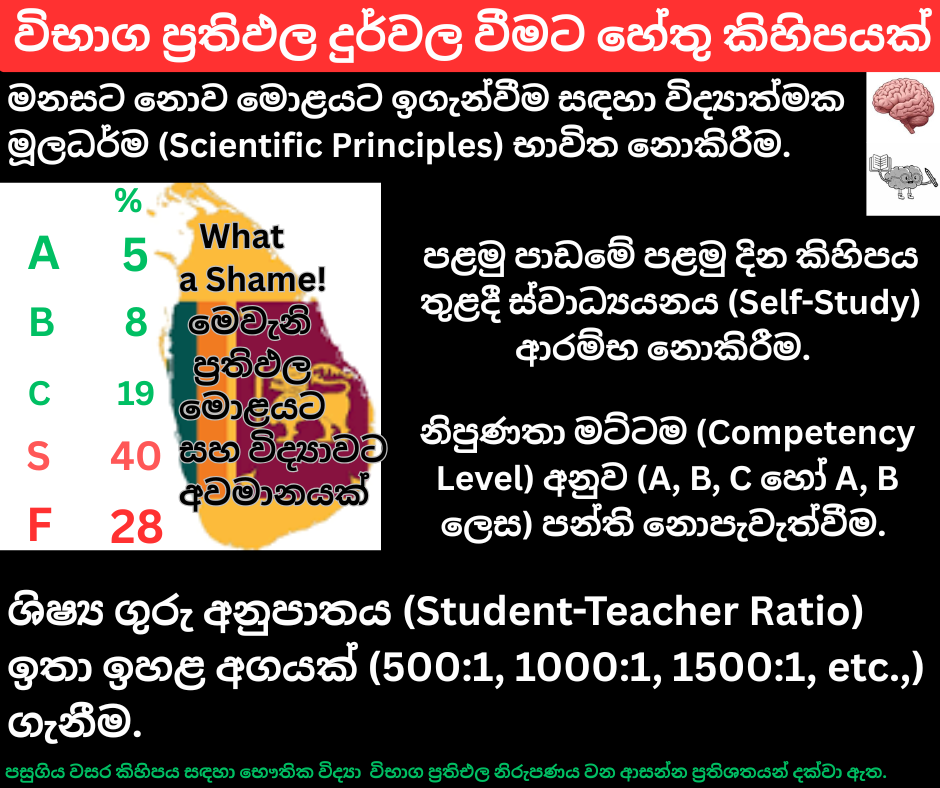
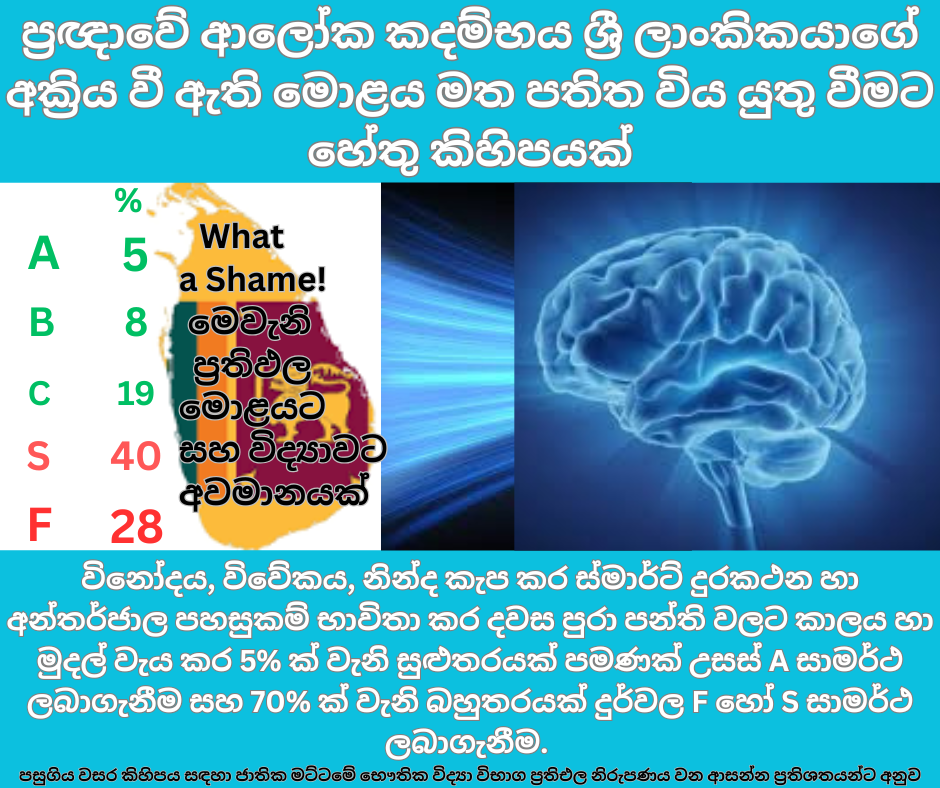
In the past few decades, examination results have been poor in many subjects including Chemistry and Physics. For Advanced Level Physics, the percentage of A passes is less than 10% and the percentage of F and S passes is more than 50% in every year.
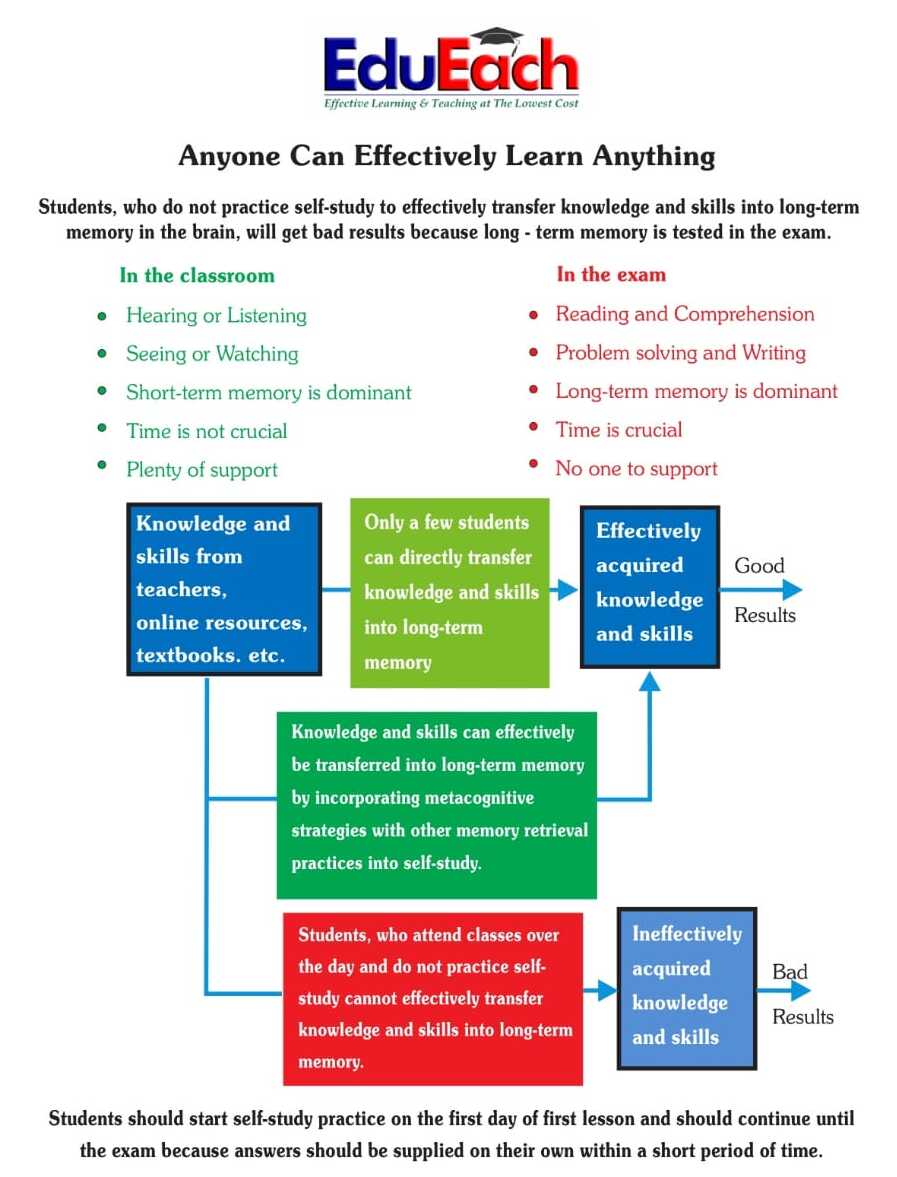
One of the most common reasons why students have weak results in their exams is the lack of self-study practice. Self-study improves reading, writing, understanding, memory retention and retrieval, and problem-solving skills which are tested in the exam. Subject knowledge and problem-solving skills (Analytical, Critical, Creative, etc.), which are needed to solve problems in the exam, should be retrieved from long-term memory within a short period of time (two or three hours).
Students who attend classes throughout the day practice skills such as hearing or listening and seeing or watching that do not strengthen long term memory. Although these students cannot solve problems on their own, they can watch teachers solve problems. This does not mean that students should not attend classes, but it does mean that they should spend considerable time to transfer knowledge and skills into long term memory.
Because teaching will strengthen memory retention and retrieval very greatly, students can rehearse teaching or they can teach their peers during group discussions. However, in the exam, students have to teach examiners what they have learnt in order to get marks. Students can incorporate metacognitive strategies with other study techniques such as immediate review practices, spaced and interleaved retrieval practices, etc. into their self-study practice.